
What Kills Hotel Deals: The Development Mistakes That Destroy Value Before Opening Day
Most hotel development failures are not caused by bad markets or bad luck. They are caused by specific, identifiable decisions made early in the process that compound into problems too large to solve by the time anyone notices them.
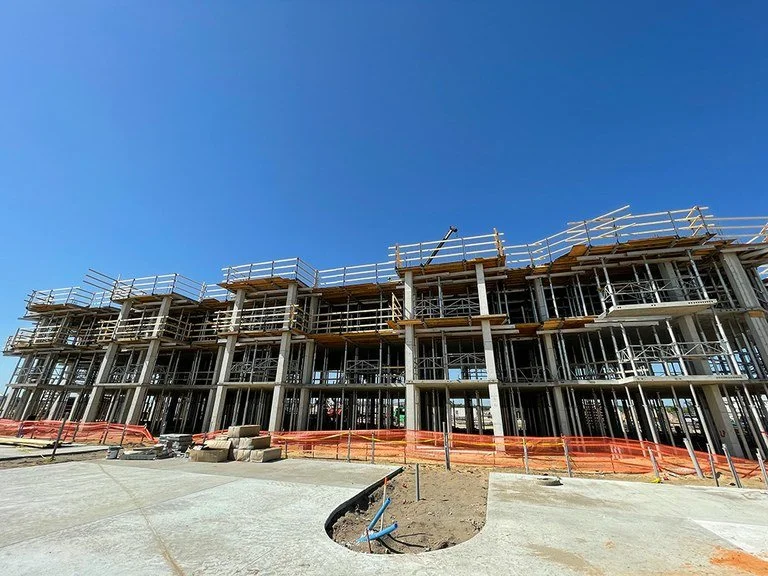
The decisions that determine whether a hotel development succeeds are made years before the first guest checks in.
Hotel development is an expensive place to learn. The capital at stake is large, the timeline between decisions and consequences is long enough that cause and effect are hard to connect in real time, and the hospitality industry has a cultural tendency to attribute failures to market conditions rather than to the decision-making that preceded them. The result is that the same hotel development mistakes get made repeatedly, by experienced developers as well as first-timers, because the industry does not have a strong tradition of honest post-mortems.
This analysis covers the eight hotel development mistakes that show up most consistently in projects that underperform, stall, or fail outright. None of them are obscure. Most of them are avoidable with the right combination of analytical rigor, operational knowledge, and willingness to challenge assumptions that feel comfortable early in the process.
Mistake One: Building the Wrong Product for the Market
The most consequential hotel development mistake is also the most fundamental: building a product that the market does not actually support at the scale and price point the pro forma requires. This mistake almost never presents itself as an error at the time it is made. It presents as a reasonable interpretation of demand data, competitive analysis, and brand positioning guidance that turns out to have been optimistic in the ways that hurt most: occupancy assumptions, average rate, and time to stabilization.
The developers most vulnerable to this mistake are those who commission feasibility studies after they have already committed to a product concept, rather than using the feasibility process to determine what the market can actually support. A feasibility study structured to validate a predetermined conclusion is not a risk management tool. It is a document that provides comfort while the real risk accumulates.
For the framework that structures demand analysis and competitive benchmarking to produce useful conclusions, see hospitality feasibility insights
Mistake Two: Underestimating the Cost of Operator Selection
The hotel operator selection decision is treated in most development processes as a negotiation about fees, brand standards, and management agreement terms. That framing misses the most important dimension: the long-term fit between the operator's capabilities, culture, and target guest profile and the specific market position the developer is trying to build.
An operator excellent at managing convention hotels is not the right choice for a lifestyle boutique. A brand with strong corporate travel distribution is not the right flag for a resort targeting leisure guests with high wellness budgets. These mismatches are obvious in retrospect and genuinely difficult to see clearly during a competitive selection process where every brand presents its best case. The cost of getting it wrong shows up three to four years after opening, when the property has stabilized at a RevPAR position 15 to 25 percent below what the market could support under different management.
The operator selection decision determines what the hotel can become for the next decade. Most developers spend more time negotiating the construction contract.
Mistake Three: The F&B Trap
Food and beverage is simultaneously the most powerful tool a hotel developer has for creating a distinctive asset and the most reliably mismanaged component of hotel development. The F&B trap is the pattern in which developers underestimate the operational complexity of hotel F&B, underinvest in the concept and talent required to make it work, and watch a component that should be generating revenue and brand equity become a recurring source of losses and guest complaints.
The most common form of this mistake is designing F&B space for aesthetics and scale rather than operational viability. A 200-seat restaurant that requires 80 covers to break even, in a hotel generating 40 covers of in-house demand on an average night, is a financial problem dressed as a design decision. The developers and operators getting F&B right approach it as an independent hospitality business that happens to sit inside a hotel, bringing in genuine F&B talent at the concept stage and building the community relationships that drive local demand before the hotel opens.
Mistake Four: Misreading the Competitive Set
Every hotel development pro forma includes a competitive set analysis. Very few include a forward-looking view of what the competitive set will look like when the project opens and stabilizes, typically three to five years from the analysis date. A hotel that underwrites strong ADR performance against a current competitive set of aging inventory may open into a market refreshed by two new lifestyle hotels, a major brand renovation, and a repositioned independent.
The competitive set analysis that avoids this mistake is not just a snapshot of current supply. It is a pipeline analysis that identifies planned and probable new supply, estimates the competitive impact of renovation and repositioning activity among existing hotels, and stress-tests the pro forma ADR and occupancy assumptions against a range of competitive scenarios rather than a single base case.
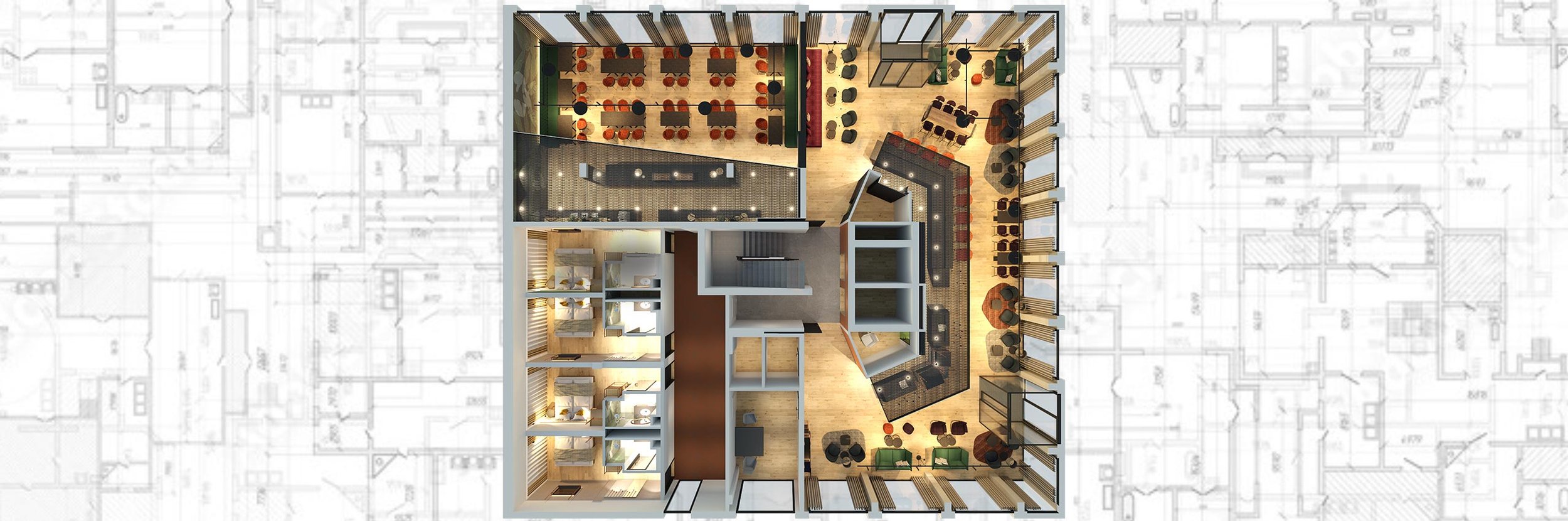
The decisions that most consistently destroy value in hotel development are made at the planning stage, not during construction.
Mistake Five: Inadequate Preopening Budget and Timeline
Preopening is the phase that most development pro formas underestimate most consistently. Preopening costs for a full-service hotel in a primary market routinely run to $3,000 to $5,000 per key. The timeline from hiring the preopening team to achieving stabilized occupancy is typically 18 to 36 months. Both numbers are frequently understated in development underwriting, and both understatements have direct consequences for investor returns.
An inadequate preopening budget means a hotel opens without the talent, systems, marketing infrastructure, and community relationships it needs to perform at the level the brand and the pro forma require. The cost of a bad opening is not just the revenue missed during the ramp. It is the brand reputation damage that extends the time to stabilization and suppresses the ADR premium the project was built to command.
Mistake Six: Ignoring the Exit Before the Entry
Hotel development capital needs an exit, and the exit conditions need to be underwritten at the point of entry rather than deferred until the project is stabilized. The developers and investors who create the most value are thinking about the buyer profile for the stabilized asset before they break ground: who will want this hotel, what cap rate they will underwrite it at, and what the hotel needs to look like operationally and financially to maximize the exit valuation.
A developer who knows their likely buyer is an institutional REIT with a preference for branded full-service hotels in primary markets will make different brand selection, management agreement, and operational investment decisions than a developer building to hold indefinitely.
For how the mixed-use structure shapes exit strategy across multiple asset classes, see mixed-use hospitality strategy
Mistake Seven: Design Decisions That Cannot Be Undone
Hotel design generates a category of mistakes that are uniquely expensive because they are built into the physical asset and cannot be corrected without significant capital expenditure. The most common is the room count and room mix decision. A hotel built with too many rooms for the market it serves will operate at artificially suppressed occupancy for its entire life. A hotel with the wrong room mix, too many suites relative to demand or a room size configuration that limits rate strategy flexibility, will consistently underperform the revenue potential of its competitive set.
Lobby and public space decisions carry similar irreversibility. A lobby designed for an operational model the hotel later needs to change, an F&B footprint that is too large or small for actual demand, back-of-house configurations that create operational inefficiencies the team works around for decades: these are design decisions that feel like aesthetic choices during development and reveal themselves as economic constraints during the operating life of the asset.
Mistake Eight: Treating Hospitality Expertise as Optional
The final and most avoidable hotel development mistake is proceeding without genuine hospitality operational expertise at the table during the development process. Architecture, finance, construction, and legal expertise are well represented in most hotel development teams. Hospitality operational expertise, the specific knowledge of how hotels actually work, what guests actually need, and what the operational consequences of specific design and brand decisions will be, is frequently absent or underrepresented until it is too late.
An experienced hotel operator or hospitality strategist brought in at the feasibility and design stage will identify operational constraints and opportunities that pure development expertise will miss. The cost of that expertise at the development stage is a fraction of the cost of the mistakes it prevents during the operating life of the asset.
