
The Repositioning Playbook: A Hotel Repositioning Strategy Guide for Owners and Operators
Repositioning a hotel is the most consequential decision an owner makes outside of acquisition. Most do it wrong. Here is how to do it right.
Hospitality Strategy | Billy Richards Consulting
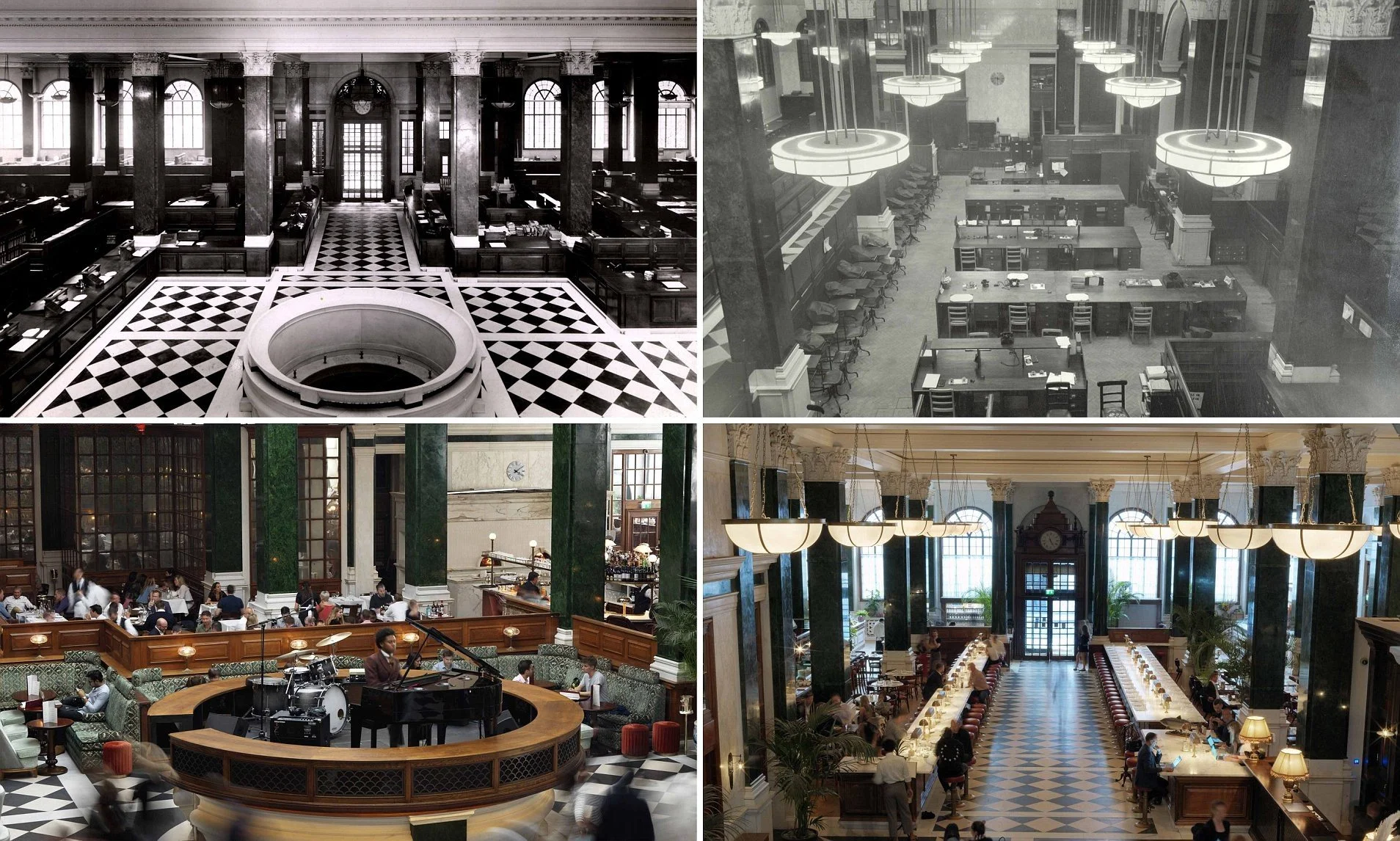
Before/after of the Ned London
Every hotel has a story it is telling the market. The question is whether it is telling the right one, to the right people, at the right price point. For most underperforming assets, the answer to at least one of those is no. Hotel repositioning strategy is the discipline of changing that answer; deliberately, systematically, and with enough conviction to hold the new position against the pressure that will come from operators, lenders, and the market itself.
The case for repositioning has never been stronger. A 202 basis point reset in cap rates through 2025 created the most attractive acquisition basis in over a decade. Construction costs remain elevated, making ground-up development harder to justify. The owners who understand how to unlock embedded value in existing assets are positioned to outperform the cycle. Those who are waiting for the market to do the work for them are not.
This guide is for owners and operators who are considering a repositioning and want a framework for thinking through it correctly, not as a renovation project, but as a strategic transformation.
What Hotel Repositioning Actually Means
The word gets used loosely. A renovation is not a repositioning. New furniture, updated bathrooms, and a fresh coat of paint in the lobby are necessary maintenance for a competitive hotel asset. They are not a repositioning strategy. A repositioning changes the answer to the fundamental question every hotel faces: who is this property for, and why should they pay what you are asking?
Effective hotel repositioning operates on three dimensions simultaneously. Physical transformation addresses the built environment — the rooms, lobby, food and beverage spaces, and amenity programming. Operational restructuring realigns staffing, service standards, and delivery to match the new positioning. Narrative repositioning reframes the property's identity in the market through brand, communications, and distribution.
Most repositioning attempts address one or two of these dimensions and call it done. The physical transformation gets completed and the brand narrative is updated, but the operational model stays the same. Or the operational overhaul is thorough but the physical environment still communicates the old positioning to every guest who walks through the door. The three dimensions have to move together, or the market will not believe the transformation is real.
A renovation is maintenance. A repositioning changes who the hotel is for and why they choose it.
Reading the Asset: Knowing When to Reposition
Not every underperforming hotel needs to be repositioned. Some need better revenue management. Some need a different operator. Some need capital investment in the physical product without any change to the brand or market position. Committing to a full repositioning on an asset that does not warrant it is a way to spend significant capital on a problem that has a cheaper solution.
The signals that a genuine hotel repositioning strategy is warranted tend to cluster around three conditions. First, competitive displacement — the hotel's physical product, brand affiliation, or service model has been materially surpassed by new supply in the market. Second, demand mismatch — the guests the hotel is attracting are structurally unable or unwilling to pay the rates the asset needs to generate acceptable returns. Third, identity erosion — the hotel has accumulated so many compromises in its positioning over time that it no longer has a coherent, legible story to tell the market.
The Three-Dimensional Framework
Start with the narrative. Define the positioning before you touch a wall. Who is the target guest? What is the value proposition that is differentiated in this market? What story does this property tell that a competitor cannot tell? These questions have to be answered with specificity — not 'upscale leisure travelers' but the specific profile of guest whose values, spending behavior, and travel patterns align with what this property can credibly deliver at the rates the asset needs.
Design the physical transformation to serve the narrative. Every capital allocation decision in the renovation should be evaluated against whether it serves the target guest and communicates the intended positioning. The lobby gets a dramatic design statement that photographs well but does not function as a welcoming arrival experience? That is capital deployed against the brand, not for it.
Rebuild the operation around the new position. New service standards. New training. New staffing ratios calibrated to the target segment's expectations. New F&B programming that reflects the positioning rather than the path of least resistance. This is the hardest and slowest dimension of repositioning, and it is the one that most determines whether the guest actually experiences what the new brand narrative promises.

Physical transformation is the visible part. Operational transformation is what determines whether it holds. (the newly renovated Waldorf Astoria in NYC)
The Brand Decision
A hotel repositioning strategy almost always involves a brand decision, even if the conclusion is to retain the current flag. Owners who approach the brand question last — after the design is complete and the operator is engaged — are giving up significant strategic leverage. The brand determines the distribution strategy, the guest profile, the service standards, and the competitive set the hotel will be measured against. Designing a hotel without knowing its brand is designing without a brief.
Independence is increasingly viable for hotels with strong location, design differentiation, and operator capability. The rise of soft brands and collection programs has created intermediate options that provide distribution without the operational constraints of a hard brand. But independence requires genuine commitment. An independent hotel that looks and operates like a branded hotel without the brand's distribution is getting the worst of both worlds.
The Market Timing Question
Repositioning cycles create natural windows for transformation, and owners who understand the current market are positioned to act with conviction. The combination of elevated acquisition basis, constrained new supply from high construction costs, and structural demand growth in the markets that matter creates conditions where a well-executed hotel repositioning strategy can generate outsized returns relative to the capital deployed.
For a deeper look at how repositioning connects to broader asset performance, see our analysis of hospitality asset value creation
If you are repositioning into the boutique tier specifically, the boutique hotel strategy framework
Because branding is inseparable from repositioning, see our analysis of increasing hotel profitability through branding
The Ramp and What Owners Get Wrong About It
Every repositioning underwriting includes a ramp period — the time from reopening to achieving stabilized performance at the new position. Most underwritings are too optimistic about it. Not because the new position is wrong, but because the market takes time to understand and believe the change.
A hotel that was a mid-market business property for a decade does not become a luxury lifestyle hotel in the minds of travel managers, OTA algorithms, and loyalty members on reopening day. The distribution has to be rebuilt. The reviews have to accumulate at the new service level. The brand story has to reach the people it needs to reach. This takes longer than most owners project, and the capital structure has to be able to absorb the extended ramp without distress.
The practical implication is that repositioning programs need to budget for an eighteen to thirty-six month ramp as the base case, not the downside scenario. Pre-opening marketing investment has to start before the hotel reopens, not on reopening day.
The Discipline of Holding Position
The hardest part of a hotel repositioning strategy is not the transformation itself. It is maintaining the new position against the pressure to revert. Revenue management will want to cut rate when the ramp is slow. Ownership will want to see occupancy numbers improve. The operator will want to make the product easy to sell. Each of these instincts, if acted on without discipline, will undo the repositioning.
The discipline required is a clear rate floor, held consistently, with a shared understanding across the owner, the operator, and the revenue management team of why it is there and what it protects. The position is the asset's long-term value. The short-term occupancy is a rounding error against that.
What Successful Repositioning Looks Like
Done well, a hotel repositioning strategy produces a compound effect that goes beyond the initial rate and occupancy uplift. The asset becomes legible to a new demand segment it could not previously access. The brand story becomes specific enough to be useful in the market. The operational model is calibrated to deliver on the positioning consistently enough that the reviews reinforce rather than undermine it. And the capital structure, if it was built correctly for the ramp, allows the owner to hold the position long enough for the market to believe it.
That is what the market is paying the repositioning premium for. Not the renovation. The conviction.
