
The Brand Profit Equation: Increasing Hotel Profitability Through Branding
Brand decisions are financial decisions. Most hotel owners treat them as marketing decisions. That gap is where profitability is lost.
Hotel Brand Strategy | Billy Richards Consulting
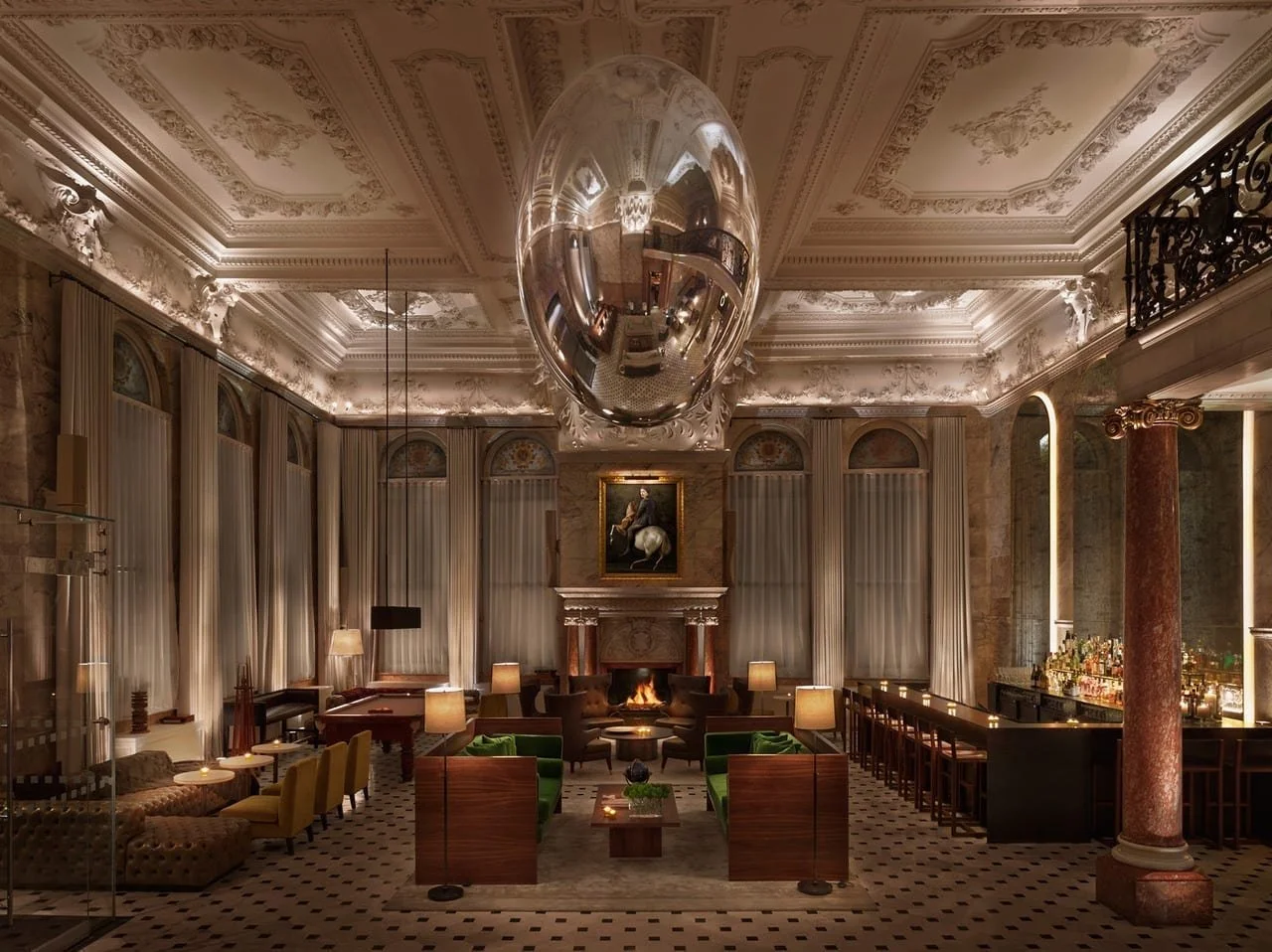
Brand is not a marketing asset. It is the primary driver of rate authority, distribution cost, and long-term profitability. (image: The London Edition)
When hotel owners talk about profitability, they tend to focus on the levers they can see clearly: occupancy, ADR, labor cost, and energy expense. But in most hotel assets, the decisions that have the largest long-term impact on profitability are not operational decisions. They are brand decisions — and most owners are not making them with the analytical rigor they apply to their operating budget.
Increasing hotel profitability through branding is not a marketing exercise. It is a financial discipline. The brand architecture of a hotel determines the rate it can sustain, the cost of distribution it must absorb, the guest it attracts and retains, and the operational standards it must fund to deliver on its promise. Each of those variables flows directly to NOI.
Mechanism One: Brand and Rate Authority
The most direct connection between branding and hotel profitability runs through rate. A hotel with clear, specific brand positioning commands rate authority that a vague or undifferentiated competitor cannot access, regardless of whether its physical product is comparable. Hotels with strong brand differentiation in their competitive set consistently achieve ADR premiums of 15 to 25 percent over comparable physical products with weaker brand positions.
At 200 keys and 65% occupancy, a $25 ADR premium represents approximately $1.2 million of additional annual revenue. Against a 7% cap rate, that is $17 million of additional asset value — generated by brand positioning, not by renovation capital.
A $25 brand-driven rate premium is worth $17 million in asset value at a 7-cap. That is the financial argument for treating branding as a capital decision.
Mechanism Two: Distribution Cost and the Direct Booking Premium
Brand decisions affect profitability not just through rate but through the cost of generating demand. A hotel that is OTA-dependent is paying 15 to 30 percent of room revenue in commission on every booking that flows through that channel. A hotel with strong brand equity and a developed direct channel pays dramatically less per booking, with the savings flowing directly to NOI.
On $10 million of room revenue, the difference between 50 percent direct and 25 percent direct is $700,000 to $800,000 of annual NOI — before accounting for any rate premium from the stronger brand. At a 7% cap rate, that NOI difference is worth over $10 million in asset value.
Mechanism Three: Brand-Led F&B and Ancillary Revenue
A hotel whose F&B operation is an extension of its brand positioning generates F&B revenue at a fundamentally different scale than one that is managing F&B for breakeven. When brand-led F&B captures 35 to 40 percent of total property revenue, the profitability implications are transformative. It is the difference between a hotel where rooms carry the entire financial model and one where F&B contributes to NOI, reducing the rooms-side pressure that drives rate compromises and occupancy chasing.
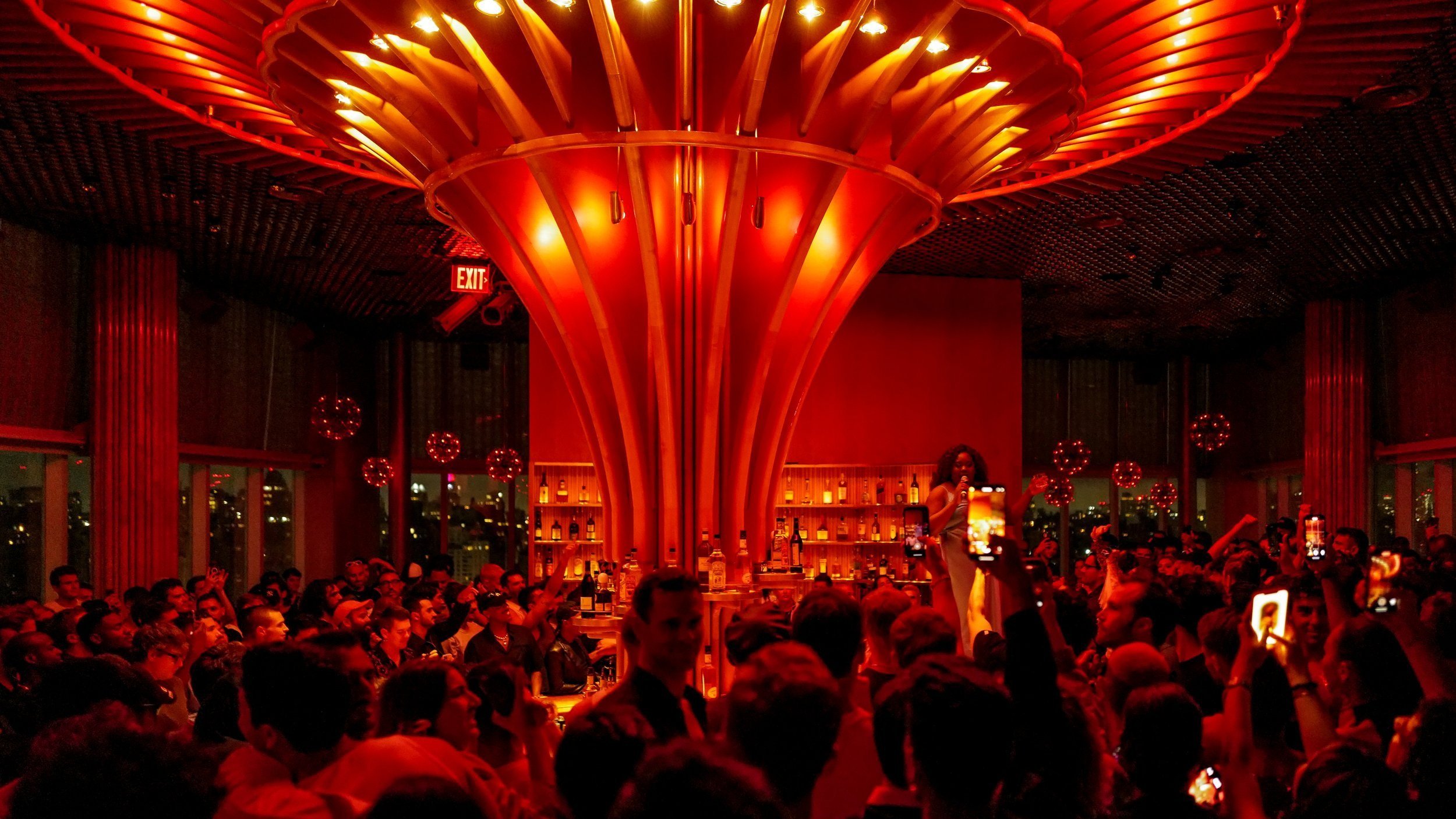
Brand-led programming is the mechanism through which rate authority, repeat visits, and ancillary revenue are built.
Mechanism Four: The Loyalty Premium
The most profitable form of loyalty for a hotel is not program loyalty — it is identity loyalty: the guest who returns to a specific property because of what that property means to them, independent of any points calculation. The identity-loyal guest is less price-sensitive, more likely to book direct, more likely to generate reviews and referrals, and more likely to increase spend per visit as their relationship with the property deepens.
Building identity loyalty requires a brand that earns it — through a specific point of view, programming that matters to the target guest, and service delivery that consistently demonstrates that the hotel knows who it is for.
Mechanism Five: Brand Consistency and Operating Cost
A clear brand identity reduces operating cost by clarifying every decision the operation has to make. When a hotel has a specific point of view about who it is for and what it delivers, the answers to operational questions become simpler. Which amenities to offer and at what standard. Which vendors to work with. Which hiring profile to target and how to train for it.
In a market where 0.5 points of review score translates into measurable RevPAR difference, the profitability cost of brand ambiguity is real and compounding.
Building the Brand Profit Architecture
The practical work of increasing hotel profitability through branding starts with a brand audit framed as a financial analysis, not a marketing exercise. Where is the hotel's current positioning relative to the rate the asset needs? What is the gap between brand promise and brand delivery, measured in review scores, repeat rate, and direct booking mix? What would a direct channel improvement of 10 percentage points be worth in annual NOI?
For how brand selection and positioning decisions interact with physical transformation, see the hotel repositioning strategy guide
For how brand decisions contribute to the full asset value creation stack, see the analysis of hospitality asset value creation
For independent operators building brand architecture without a global flag, the boutique hotel strategy framework
The Brand Decision Is the Investment Decision
Every dollar of hotel brand investment — in design, in programming, in talent, in the physical expression of a point of view — is a capital allocation decision that will compound or erode over the hold period of the asset. The hotel that treats brand as an expense to be managed is optimizing for the wrong thing.
The financial case for increasing hotel profitability through branding is not complicated. It is rate authority that holds across the cycle. It is distribution cost that declines as direct bookings grow. It is F&B that contributes to NOI rather than compressing it. It is loyalty that does not require a points budget to maintain. It is an operation that makes better decisions faster because it knows who it is for.
All of that starts with a brand decision made with the clarity and conviction it deserves.
