
The Invisible Architecture: What Creative Direction in Hospitality Actually Does
Creative direction in hospitality is not a title or a taste function. It is the discipline that holds a hotel's identity together across every surface, every season, and every leadership change.
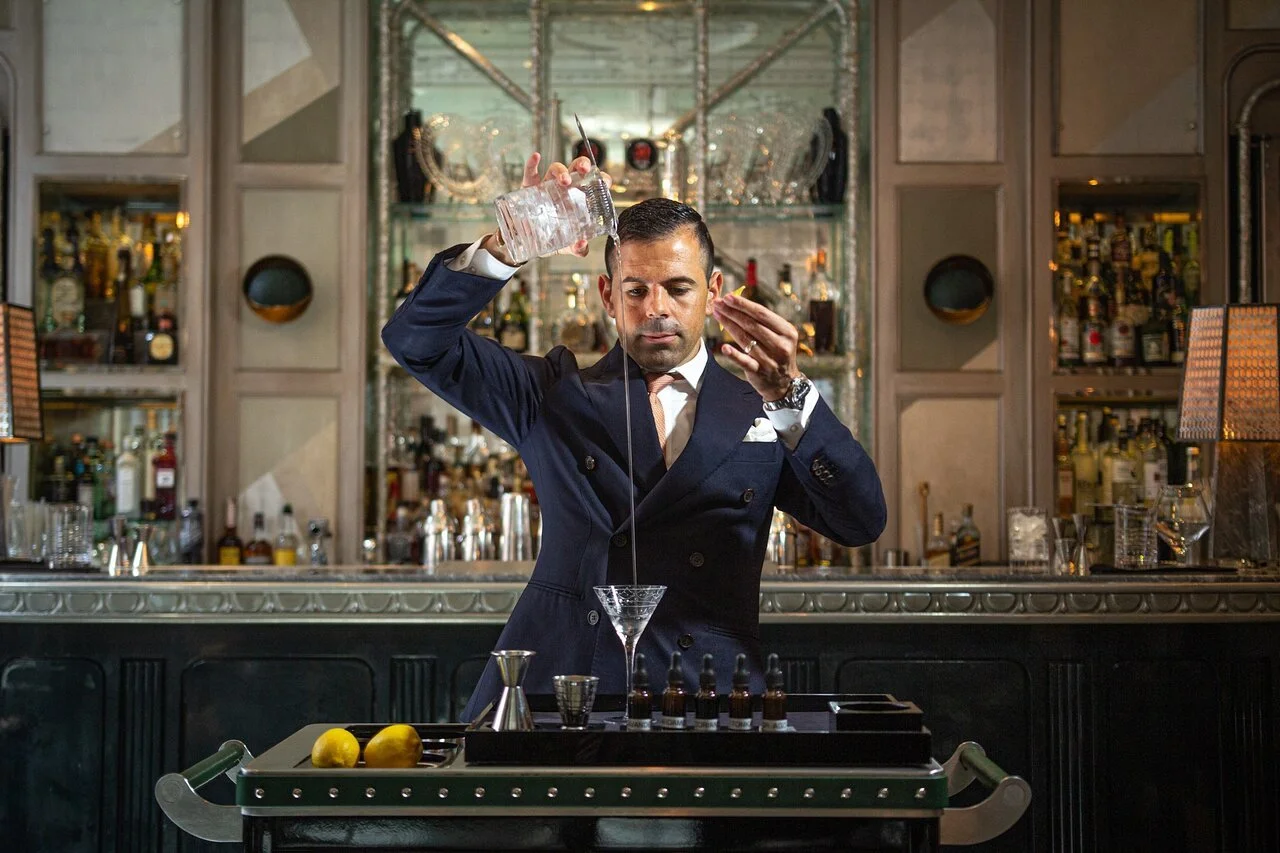
The strongest hotel brands in any market are the ones where every creative decision was made from the same brief. (photo: The Connaught Bar London)
Creative direction in hospitality gets misunderstood in two directions simultaneously. Hotel owners who undervalue it treat it as a decorating function: someone to choose the furniture and approve the photography. Hotel owners who overvalue it without understanding it treat it as a magic quality that certain designers possess, a kind of aesthetic genius that can be hired and pointed at a project to produce a vibe. Neither framing is useful, and both produce predictable failures.
What creative direction in hospitality actually is, at the level at which it creates commercial outcomes, is a discipline of coherence. It is the ongoing work of ensuring that every element of a hotel's guest-facing identity, from the architecture to the amenity card to the staff's handwriting on a welcome note, is expressing the same brief. Without a strong creative direction function holding that brief, each contributor will make individually reasonable decisions that are collectively incoherent. The result is a hotel that looks like the output of a committee, which is exactly what it is.
What Creative Direction Is Not
Creative direction in hospitality is not interior design. An interior designer's primary responsibility is the physical environment. A creative director's responsibility is the total guest experience, of which the physical environment is one component. A creative director working at the right level will influence the interior design brief, but they will also influence the F&B concept, the staff uniform, the programming calendar, the photography direction, the written voice of all guest communications, and the criteria for selecting the music that plays in the lobby at 6pm on a Tuesday.
It is not brand management, though it overlaps with it. Brand management asks: are we inside the guidelines? Creative direction asks: are we inside the guidelines and is this the most powerful expression of what we are trying to say? It is not marketing direction, though it informs everything marketing does. The gap between what a hotel's marketing promises and what its physical reality delivers is almost always a creative direction failure.
The Scope of Creative Direction in a Hotel Context
Physical environment encompasses not just the permanent design but the seasonal and temporal modulations of it: how the lobby changes at different times of day and different seasons, what objects and elements are added, removed, or rearranged to keep the environment feeling current and considered rather than static and permanent. F&B identity is one of the highest-leverage areas of creative direction, precisely because food and beverage changes most frequently and is most vulnerable to drift away from the brand's overall identity.
The creative director's job is not to make the hotel beautiful. It is to make the hotel legible: to ensure that every element tells the same story at the same volume.
Programming and activation is the third major scope area. A collaboration with the wrong brand partner undermines the positioning the hotel has spent years building. A cultural series that attracts the wrong community shifts the hotel's identity in the market in ways that may be difficult to reverse. Communication design, including everything from the room service menu to the guest welcome letter, is the fourth scope area. These touchpoints are often managed by teams optimizing for clarity and conversion rather than brand expression. The result is communication that is functional but generic, telling the guest nothing about who this hotel is and what it believes.
When to Bring in Creative Direction and What to Expect
The most valuable time to engage a creative direction function is before any other creative work begins. A creative director who sets the brief before the interior designer, the graphic designer, the F&B team, and the marketing agency begin their work gives all of those contributors something to respond to rather than something to react against. The cost of misalignment between creative contributors is enormous and almost always falls on the owner in the form of expensive revisions, delayed openings, and the compounded cost of launching with a brand that does not hold together.
For hotels already operating, the most common entry point is a brand audit: a systematic review of every guest-facing element of the hotel against the brand brief, identifying where the hotel is expressing its identity clearly and where it has drifted. The output of good creative direction is not a more beautiful hotel. It is a more coherent one, where the guest cannot point to any single element as extraordinary but leaves with a strong impression of the whole.
Creative Direction as a Commercial Function
A hotel that is creatively coherent commands a rate premium over a hotel that is not, because coherence is what separates an experience from an accommodation. The guest who experienced the former will pay more for it and return more reliably than the guest who experienced the latter. That premium is earned by the quality of the brief the creative direction is working from, the rigor with which that brief is held across every creative decision, and the conviction of ownership and management in defending the brief against short-term commercial decisions that are individually rational and collectively brand-destroying.
For the brand strategy framework that gives creative direction a foundation worth building from, see hotel branding strategy
For the narrative dimension of creative direction and how story shapes the guest experience, see hospitality storytelling
For the market positioning that determines what creative choices are available to a hotel, see lifestyle hotel positioning
The Creative Director as Brand Guardian
The most important function a creative director performs is not creative generation. It is creative protection. Hotels are under constant pressure from owners who want to cut costs in ways that affect the guest-facing product, from operators who want to standardize in ways that reduce the hotel's distinctiveness, and from the simple passage of time, which erodes the freshness of any creative vision that is not actively tended.
The creative director who is functioning at the highest level is the person in the room who asks the brand question at every decision point: does this choice confirm what we have committed to be, or does it compromise it? The hotels that have held the strongest creative positions over the longest time are the ones where someone had both the authority and the courage to ask it consistently. Creative direction in hospitality is, in the end, an act of conviction that a specific point of view, held with discipline and expressed with consistency, will produce commercial outcomes that no amount of generic excellence can match.
