
10 Rules for Hotel Rebranding and Future-Proofing
A new coat of paint is not a rebrand. A new lobby is not a rebrand. A rebrand is a fundamental repositioning of what a hotel means, who it is for, and why it deserves to exist in a market that already has too many options.
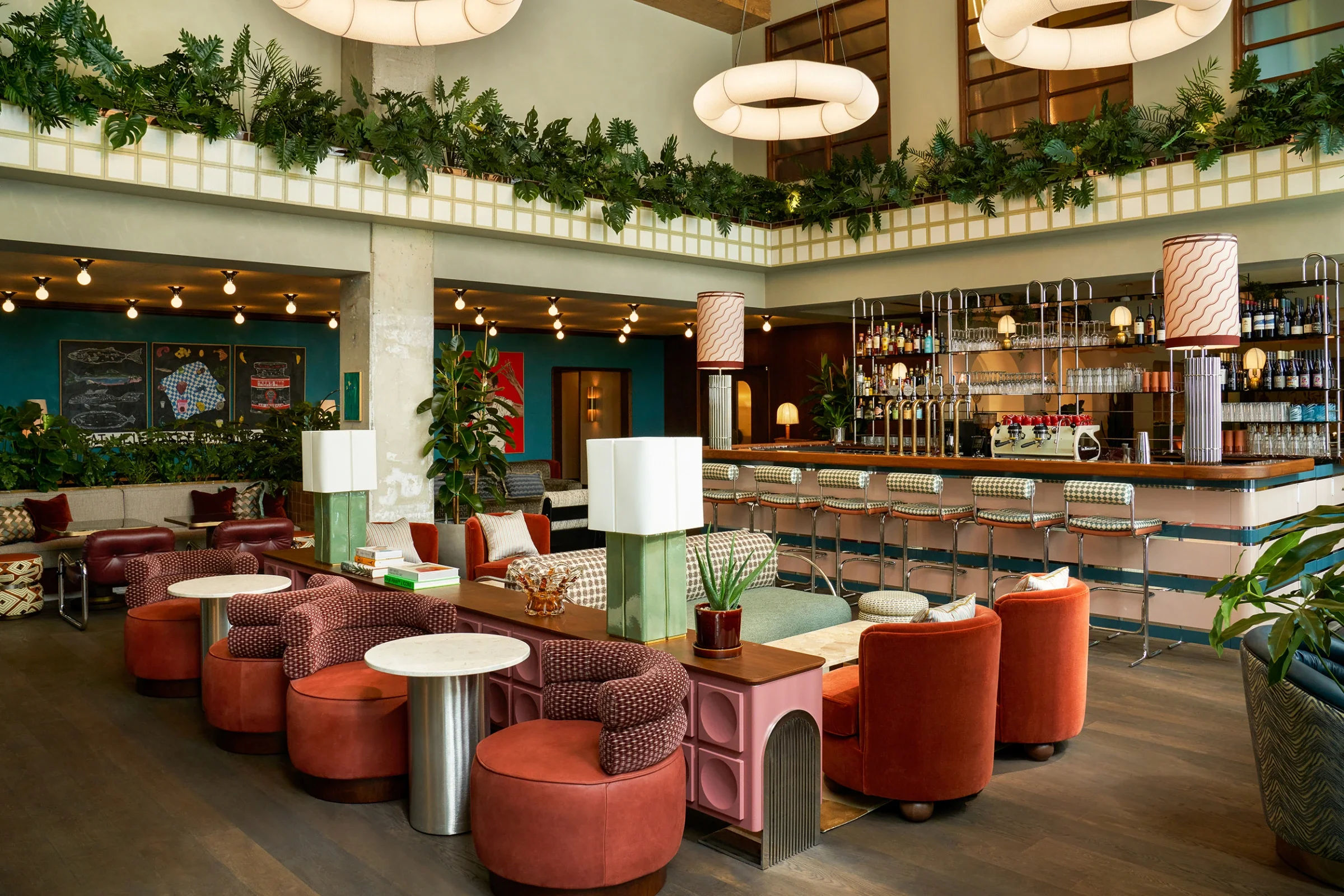
A hotel rebrand that works is not what the property looks like after. It is what the property means after. (photo: The Hoxton, Brussels)
The hospitality market in 2026 is the most crowded and the least differentiated it has ever been. Supply has grown faster than genuinely distinctive identity has. Capital has flowed into the lifestyle segment in volumes large enough that the characteristics that once made a lifestyle hotel stand out have become the minimum viable product for competing in it. The independent boutique, the locally sourced F&B concept, the art-forward lobby, the community programming: these are no longer differentiators. They are the table stakes that every operator above select-service is expected to clear.
Into this environment, the hotel rebrand has become one of the most consequential strategic tools available to owners and operators who want to break out of a market position that is either failing or simply plateauing. Done correctly, it is a fundamental repositioning of what the property means, who it exists for, and how every element of the guest experience expresses that meaning with enough consistency and conviction that the market believes it. Done incorrectly, it is an expensive lesson in the difference between changing how a property looks and changing what it is.
Here are the ten rules that determine which outcome you get.
1. Do Not Chase Trends. Thread Elements Into a Specific Identity.
The first and most important rule of hotel rebranding strategy is the one most commonly violated: do not build your new identity around a trend. The hotel industry moves in waves of collective enthusiasm that are visible enough to be seductive and broad enough to be commercially dangerous. Wellness. Biophilic design. Technology integration. Sustainability storytelling. Each of these has generated a cohort of properties that invested heavily in expressing the trend and discovered that expressing a trend is not the same thing as having an identity.
A wellness-positioned hotel that added a spa, a yoga program, and a menu of healthy options because wellness was the growth narrative of the moment is not a wellness hotel. It is a hotel that added wellness amenities to a product with no coherent point of view about what wellness means, who needs it, and why this specific property is the right place to experience it. The same logic applies to biophilic design, technology-forward positioning, and every other trend that has attracted capital and imitation faster than it has attracted genuine thinking.
Threading is the discipline that produces identity rather than trend expression. It means taking the genuine, specific truth of your property and asking how different creative and operational elements can each express that truth in their own way. When the threading is done well, the guest does not notice the individual elements. They feel the whole. That feeling is the identity. The elements are just how you built it.
2. The Infrastructure Pillar: Know What You Have, What Your Team Can Do, and What Your Market Will Bear.
Every hotel rebrand starts with an honest audit of what the property actually is, not what ownership wishes it were. And honest is the operative word, because this audit has to cover three dimensions that operators consistently underexamine when the excitement of a rebrand takes hold.
The first is the physical infrastructure. The room configuration, public space layout, F&B footprint, and the location's relationship to the city or landscape around it are not just context for the rebrand. They are primary determinants of what the rebrand can credibly be. A property with small rooms and a large, well-located lobby cannot rebrand around an intimate residential experience. A property with heritage architecture has assets that a new-build competitor cannot manufacture, and a rebrand that ignores those assets in favor of a generic contemporary identity is throwing away its most defensible competitive advantage.
The second dimension is your team. This is the one most operators skip entirely, and often the one that matters most. What does your current team genuinely excel at? What kind of service culture exists right now, beneath whatever the brand standards say it should be? A rebrand that requires a service sophistication or cultural fluency your existing team cannot deliver, and that you do not have the hiring infrastructure to build, is a vision that will be sabotaged from the inside the moment it opens. Honesty here is not defeatist. It is the thing that allows you to close the gap before launch or design a rebrand that works with the team you have while building toward the team you need.
The third dimension is your market and immediate environment. Not just the competitive set as it exists today, but the neighborhood's trajectory, the cultural community around the property, the demand generators that are growing and the ones declining, and the gaps the current competitive set has genuinely left open. A rebrand that ignores its environment will feel incongruous to the guests it is trying to attract and invisible to the community it needs to earn.
3. Your Rebrand Is Your Life Force: Staff Embodiment Is Not Optional.
You can invest unlimited capital into a hotel rebrand. You can hire the best designer, commission the best architect, develop the most thoughtful F&B concept, and write the most compelling brand narrative in the market. And if your staff does not understand it, feel it, and breathe it, your guest will not either.
The staff are not the people who deliver the rebrand after it has been created. They are the medium through which the rebrand either becomes real or remains a document. A guest who checks into a rebranded hotel and encounters a front desk agent who cannot explain what has changed, a restaurant server who does not understand the new concept's philosophy, or a housekeeping team executing tasks rather than expressing a culture, has encountered a rebrand that exists on paper and nowhere else.
You can change everything about how a hotel looks. If your staff cannot feel it, your guests never will.
The staff embodiment work is a parallel track that begins at the same time as the creative work. It starts with the leadership team, who need to understand the rebrand deeply enough to be its advocates and guardians, before it reaches the front line. It proceeds through training that is not just informational but experiential: sessions that help staff feel what the new identity is, understand why it was chosen, and connect it to their own sense of purpose and professional pride. This is also a genuine moment of reinvigoration for a team that may have been executing a tired identity for years. When handled well, the rebrand briefing is a rallying moment: an opportunity to give the team a renewed sense of what they are building, why it matters, and what role each of them plays in making it real.
4. The Partial Rebrand: Every Element Must Feed Upstream.
Not every rebrand needs to be total. A partial rebrand focused on a specific layer of the guest experience, whether that is F&B, design language, service standards, uniforms, or programming identity, can generate meaningful improvement in positioning and commercial performance without the capital or operational disruption of a full repositioning.
The critical condition that determines whether a partial rebrand creates value or destroys it is this: every element must feed upstream into a larger, coherent identity. A new F&B concept disconnected from what the hotel is becoming is an amenity upgrade that will feel disjointed to guests, confuse the market, and plateau quickly because it is not building toward anything larger than itself. The test is simple: if a guest experienced only this element, would they know what this hotel is and who it is for? If yes, the element is feeding upstream. If no, it is money spent rather than money invested.
5. What a Real Rebrand Actually Is: Feeling Over Laundry List.
A new coat of paint is not a rebrand. A refreshed lobby is not a rebrand. The law of diminishing returns applies directly to physical beautification in hospitality. The first renovation lifts a tired property to a competitive baseline. The second generates a smaller lift. The third, smaller still. At some point the property is physically excellent and competitively indistinguishable, and the investment has nowhere left to go because it was never building toward anything beyond the physical.
A rebrand has to become a feeling that people can emotionally connect to before they walk through the door. The test is whether you can describe your rebrand in a way that makes someone feel something rather than just understand something.
THE LAUNDRY LIST VERSION
We upgraded the hotel with a new common space for business travelers and locals with high-speed wifi, new charging ports, and a modern coffee shop.
THE REBRAND VERSION
The property is now positioned around an active lifestyle for driven professionals. We are fully tech-enabled and have created a new lounge centered around the needs of local entrepreneurs and business travelers alike, sharing amenities that all guests enjoy to create a genuine sense of community. A high-tech lounge with areas for intense focus alongside energy-promoting community spaces. A new cafe offering healthy, energy-focused drinks and snacks: fresh-pressed vegetable juices, coffee with MCT oil, and others designed to keep guests healthy, energized, and sharp. Wayfinding is built around energy and calm through art, lighting, and color theory in our hallways and common spaces. A new business networking event every Wednesday evening. A daily yoga session free to all guests. And dietary recommendations to optimize your stay, shared at the time of booking.
The first version describes features. The second describes a world you can step into before you arrive. That is the difference between a renovation and a rebrand.
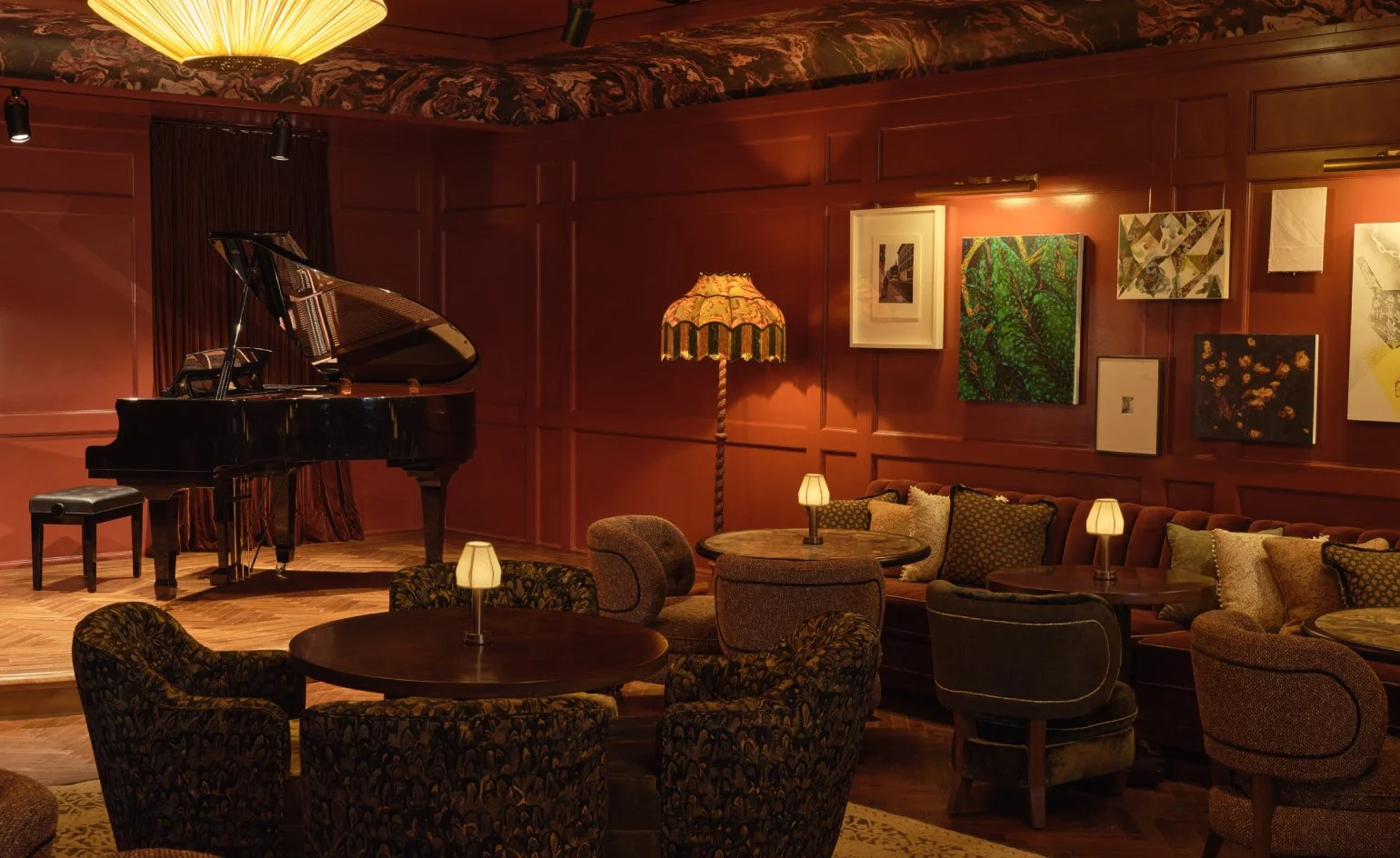
A rebrand is not a list of improvements. It is a feeling you can describe before you walk in the door. (photo: The Ned,NYC)
6. Find the Right Partner: The Macro Before the Micro.
One of the most consequential decisions in a hotel rebrand is who you bring in to help you build it. Most marketing and branding agencies operate from a templated approach. They have a process: discovery, brand audit, competitive review, positioning workshop, identity development. The process is not wrong. The problem is that many agencies move through it with a cut, copy, and iterate methodology, applying frameworks that worked on a previous hospitality client to your property, your market, and your guest without the depth of examination that a genuine rebrand requires.
What a genuine rebrand requires is someone who can hold the macro before getting into the micro. Someone who sees the whole, the property, the team, the market, the competitive landscape, the guest psychology, the operational reality, and the financial ambition, as a single system before making a single creative decision. Someone who understands that the design brief, the F&B brief, the service brief, and the communication brief all have to come from the same place or the rebrand will fragment the moment it is exposed to the real complexity of an operating hotel.
That is the work of a cultural architect: a creative and strategic partner who operates at the intersection of brand, hospitality, operations, and culture, and who can hold the vision coherently from the positioning brief through the opening and beyond.
To understand what that role looks like in practice and why it produces fundamentally different outcomes than a conventional agency engagement, read more about the cultural architect approach
7. Define the Win Before You Start.
Most rebrands fail not because the creative is wrong but because nobody defined what success looked like before the money was spent. A rebrand needs a scorecard before it needs a mood board. That scorecard has to be specific, measurable, and connected to the financial and operational outcomes that ownership actually cares about, not just the brand metrics that are easy to track.
What ADR premium are you targeting by end of year one, year two, year three? What repeat rate benchmark are you building toward? What review score movement do you expect from the service and experience investments? What earned media volume and quality defines a successful launch? What occupancy mix shift, from OTA-dependent to direct, from transient to loyal, are you working toward and over what timeline? These are not questions a creative partner can answer for you. They are questions that ownership and leadership need to align on before the rebrand brief is written, because they determine what the rebrand is actually being asked to deliver. The scorecard is not a constraint on the creative work. It is the thing that gives the creative work a direction worth committing to.
8. The Guest Has to Feel It Before They Book.
The rebrand does not begin at the front desk. It begins at the first digital touchpoint, which for most guests is a search result, a social post, or a word-of-mouth recommendation that sends them to your website or your Instagram. If the feeling of the rebrand is not present and legible at that first contact, the guest who is right for your new identity will not self-select in, and the guest who is not right for it will book based on price and arrive to find a hotel that was not what they were expecting.
A website that expresses the rebrand's feeling rather than just its features. A booking flow that begins personalization rather than just collecting information. A pre-arrival communication that continues the narrative of the identity the guest chose rather than defaulting to a generic confirmation. Social content that shows the world the guest is walking into rather than broadcasting the amenities they will find there. When the pre-arrival experience is aligned with the in-property experience, the guest arrives already oriented, already emotionally invested, and already predisposed to experience the stay through the lens of the identity they chose. That orientation is worth more than any single in-property upgrade.
9. Rebranding as Marketing: Build the Story Before You Open the Doors.
A hotel rebrand is one of the most powerful marketing events in the operating lifecycle of a property, and most operators squander it by treating the marketing as something that happens after the rebrand is complete. The launch of a rebrand creates a window of genuine market attention that will not stay open indefinitely. The hospitality press, the travel community, the local media, the social channels, and the OTA algorithms all respond to newness with a level of attention that decays over time. The operator who has built a compelling story, a strong visual identity, and a differentiated point of view before the launch will capture that attention and convert it into bookings, press coverage, and social sharing that compounds long after the launch window closes.
A rebrand marketing strategy should begin six to eight months before the relaunch: soft announcement first, then behind-the-scenes content that makes the audience feel like participants in the transformation, building to a hard launch that feels like an event rather than a press release. At launch, the rebrand should be felt simultaneously across every channel: in-house collateral telling the new story to guests already on property, digital marketing repositioned around the new identity with creative that expresses the feeling rather than the features, industry press outreach with a story angle that is specific and genuinely interesting, and a social media presence that has built an audience for the new identity before the doors open on it.
10. Protect the Rebrand From Yourself: KPIs, SOPs, and Operational Restructuring.
The final rule determines whether everything in the first nine rules compounds into a durable competitive position or gradually erodes back to where the property started. A rebrand is not a creative project with an end date. It is a new operating philosophy that has to be structurally embedded in how the business runs, or it will be quietly dismantled by the same forces that made the rebrand necessary in the first place.
The most consistent source of rebrand erosion is internal pressure to compromise the identity for short-term commercial gain. The group booking that does not fit the positioning but fills rooms in a slow month. The F&B partnership that generates revenue but contradicts the brand's values. The marketing campaign that reaches a broader audience at the cost of speaking to no one specifically. Each of these decisions is individually rational and collectively brand-destroying, and without a structural mechanism to evaluate them against the rebrand's commitments, they will accumulate until the identity is unrecognizable.
The structural mechanism is a combination of clear KPIs, strong SOPs, and an operational architecture genuinely redesigned around the new identity rather than adapted from the old one. The KPIs need to measure what the rebrand was built to deliver: rate premium trajectory, repeat rate by guest segment, direct booking share, earned media quality, review score movement at the touchpoints the rebrand specifically invested in. These are the numbers that tell you whether the rebrand is working or drifting, and they need to be reviewed at the ownership and leadership level with the same seriousness as the P&L.
The SOPs need to be rewritten, not updated. An SOP written for the hotel's previous identity and annotated to reflect the new one will default to the previous identity under operational pressure. New SOPs need to be built from the rebrand brief, in the language of the new identity, defining what excellent looks like at each touchpoint in the context of what the hotel has committed to be. And the operational architecture needs to be redesigned to reflect the financial and commercial reality of the new positioning, not just the aesthetic one. A rebrand that changes how the hotel looks and feels without changing how it prices, packages, sells, staffs, and measures performance will deliver a beautiful experience and a disappointing P&L. The rebrand has to be contextualized within the financial and operational structure of the business, not applied as a layer on top of it. That integration is what turns a rebranding investment into a compounding asset rather than a one-time event.
